Rosor Exploration
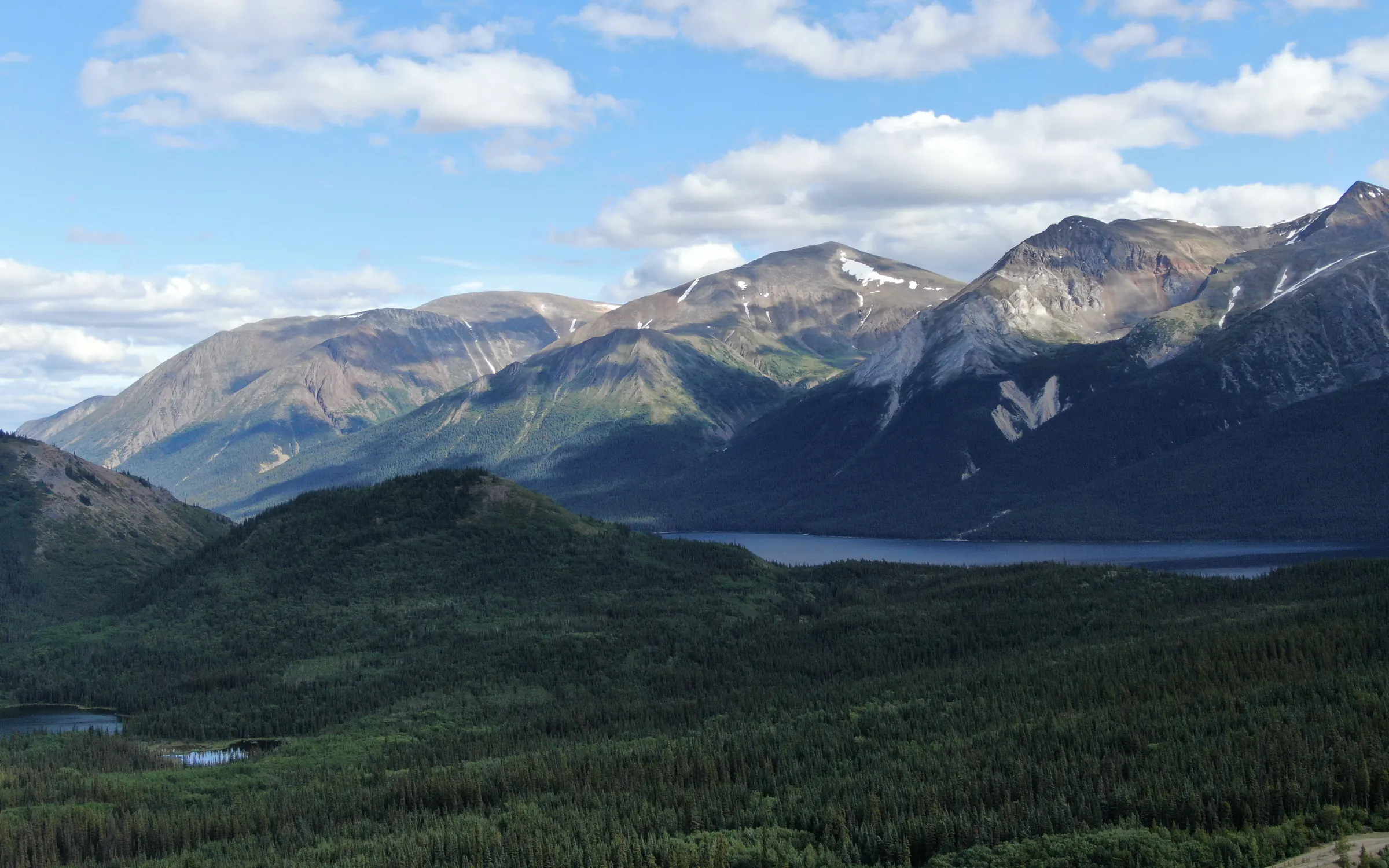
A mountain range above a lake and spruce forest, the kind of ground a drill program has to be aimed across

Drill program economics

What flying first is worth to your drill program.

Give up two drillholes to aim the other thirty-one, and the survey pays for itself if your targeting improves by 7.1%.

On a $1.5M program at $300 a metre, the budget buys 33 holes.

Pay for the survey first and it buys 31. To get that money back, the 31 aimed holes have to out-perform 33 unaimed ones by 7.1%. The case is made twice below, once for the geologist and once for the board.

The technical case

Why fly a survey before committing a drill program?

Because a drilled miss is money that never comes back. All-in diamond drilling runs about $300 per metre, so a 150 m hole is $45,000 before anyone reads the core.

  1. 01

    Drill and miss, and that money is gone

    A $1.5M program is 5,000 m of committed capital at $300 a metre, and every 150 m hole spends $45,000 of it. A hole that misses tells you only that the deposit isn't there. A survey tells you where the structure runs, where the alteration sits and where the anomalies line up, and it does that before any of that budget is spent.

  2. 02

    6.7% of the budget, and it has to beat 7.1%

    Those two figures are the same money. A $100,000 survey is 6.7% of a $1.5M budget, and it is 7.1% of the $1.4M you have left to drill with. The second number is the bar: your targeting has to be 7.1% better than it would have been without the survey before it has paid for itself. That 6.7% is a magnetics and LiDAR program. With EM in scope it runs closer to 15% and the bar rises with it, so we'll run your program's numbers in the consult.

  3. 03

    Same metres, aimed instead of spent

    Drilling on geology alone means testing ideas one expensive hole at a time. Magnetics maps the structural corridors and lithological contacts, and where conductors are the question, electromagnetics (EM) maps resistivity contrasts from surface down to 1000 m. Together they let your team follow the system along strike and at depth instead of drilling blind.

The trade

Where does the next dollar go?

The same exploration budget can go two ways. The rows are the questions a program manager has to answer before the rigs are booked.

These are working figures for scoping. The value calculator runs the same ratio against your drill budget.

What it costs

Straight to metres
$45,000 a holeAt $300/m all-in, a 150 m hole spends that before the core is read.
Survey first
6.7% of the drill budget

What a miss costs

Straight to metres
33 holes, aimed on geology aloneA miss tells you only that the deposit isn't there.
Survey first
Targets ranked before drilling

How you step out

Straight to metres
One expensive hole at a time
Survey first
Along strike and at depth

When it is the right call

Straight to metres
Targets already ranked
Survey first
Ground still to be ranked

The capital-markets case

Does a survey move the market?

A survey does not move the market on its own, because investors pay for drill hits. What it does is get the program to reportable hits faster and show the market the discipline it pays for.

  1. 01

    The story becomes drill-ready and disciplined

    A survey alone rarely re-rates a stock. What it changes is the drill story. Instead of a release that says you are drilling your best geological idea, the release says you are drilling ranked targets defined by modern geophysics. Every hole becomes a test of a documented target, and hits arrive sooner because the metres are aimed.

  2. 02

    Know which stage you are in

    Early-stage juniors raise on survey-derived targeting stories, and new anomalies, structural corridors and a maiden target pipeline are financeable news at that stage. Drill-stage companies get paid for hits, and the survey's job is to make those hits come from fewer holes. The economics are the same; the narrative is not. Know which one you are and sequence the spend accordingly.

  3. 03

    Rigor is visible

    A program that flies first shows the market a management team that spends drilling dollars against data, not hunches. That discipline reads in every technical disclosure, and it is what an NI 43-101 author wants sitting behind the target table.

Proof

What aimed metres look like in practice

Two programs carry the two halves of the argument. One shows targeting that ranks the ground. The other shows delivery fast enough to fit inside the drill season.

Drone magnetics
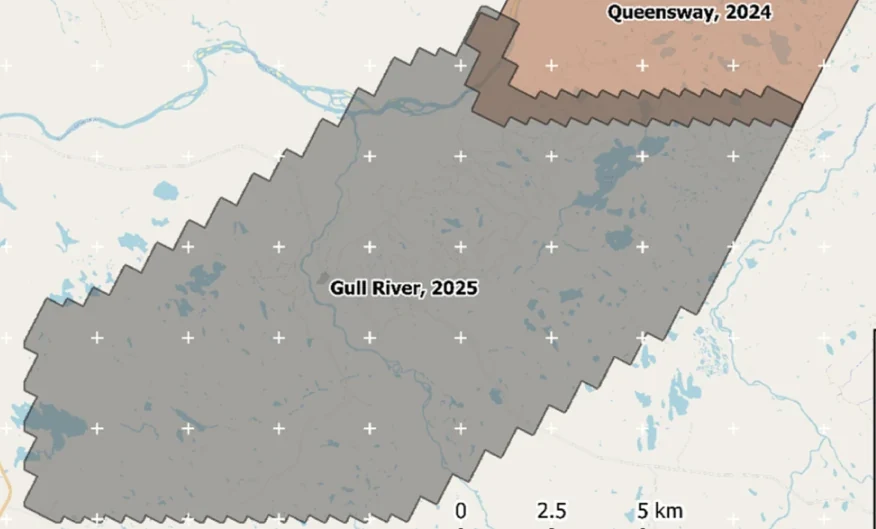
New Found Gold — Gull River survey figure

Gull River

Grand Falls-Windsor, Newfoundland

New Found Gold
315
line-km/day on this program
~4,000
line-km completed

Almost 4,000 line-kilometres acquired across the program, completed on schedule despite delays from a wildfire evacuation interrupting it and geomagnetic storms. Sustained production without trading away data quality.

“The drone magnetic survey provided high-resolution structural insights that significantly improved our understanding of the subsurface geology, allowing us to refine our exploration targets.”

David Drover · Project Geologist

Read the Case Study →

Drone magnetics
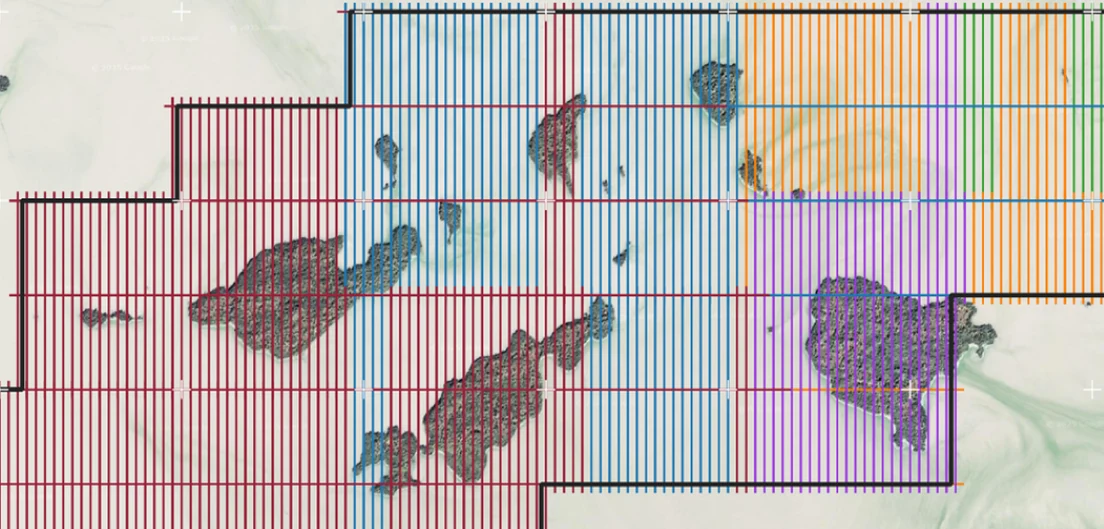
International Explorers & Prospectors — Abitibi Lake survey figure

Abitibi Lake

Abitibi Lake, Ontario, Canada

International Explorers & Prospectors
10
days, site to deliverables
3
days of acquisition

Mobilization to final deliverables in ten days, with acquisition complete in three and no mechanical downtime.

“Throughout the duration of the project, Rosor maintained clear and efficient communication with our team. They demonstrated a strong commitment to meeting deadlines by processing the collected data within a very tight time-frame, ensuring that our exploration schedule remained on track.”

Peter Colbert · CFO

Read the Case Study →

Two readings

Two ways to read the same numbers

  1. 01

    If you're the geologist

    The trade is two holes for a picture of the whole property. A section cannot tell you what sits between the holes, and a hole collared without a coherent magnetic read, or a resistivity read where the target is a conductor, is metres that could have tested a real target along strike or at depth. Two holes buys you the map that decides where the other 31 go.

  2. 02

    If you hold the budget

    The survey is a small line that de-risks a much larger one, and 7.1% is a low bar for what better targeting delivers. It also produces something the drill program does not: a dataset that survives the season, supports the next raise and shows a board that the metres were aimed rather than guessed.

FAQ

Straight answers

01

Is a survey worth it on a small drill program?

Usually yes, because small programs are the ones that can least afford a miss. On a 3,000 m program at roughly $900K all-in, one misplaced deep hole can erase more value than the entire survey costs. The fewer holes you have, the more each one needs to be aimed.

02

We already have historic data. Do we still need to fly?

Often you need less than a full re-fly, because the fix is to level and merge. On one program, a legacy survey flown without proper quality geometry was custom-levelled and merged with newly flown blocks into one cohesive supergrid. If your historic data is sound it stays in the picture, and if it isn't we fix it rather than discard it.

03

Does a survey help the raise?

It depends on your stage. Early-stage juniors raise on survey-derived targeting stories, and new targets are the news at that stage. Drill-stage companies raise on hits, and the survey's contribution is getting to reportable hits with fewer wasted metres. Either way, a data-backed target table is easier to finance than a hunch.

04

How does this fit flow-through timing?

It fits, because a drone survey is fast enough to sit inside the same spend window as the drilling it aims. A quote comes back inside a week from a shapefile, we mobilize on a contract, and deliverables land within an average of 15 business days of completion. Targeting can land before the rigs turn, and the flow-through dollars still get spent on aimed metres.

Talk to an expert

Price the survey against the metres it aims.

Send a shapefile and the metres you plan to drill. We come back with a coverage plan and a budget range, usually inside a week.

Send us your shapefile. We'll come back with a preliminary read, a coverage plan and a budget range.